
Saddle fore/aft
Where your hips sit relative to the bottom bracket
Fore/aft is about where your hips sit. Sliding the saddle moves your hips forward or back relative to the bottom bracket, the center the pedals turn around. Your hips largely set your balance over the pedals, your center of gravity. That decides how your weight splits between the saddle and your hands, which muscles share the pedaling work, and how the bike handles. On most road bikes, your hips sit well behind the bottom bracket.
| What's happening | What you feel | |
|---|---|---|
| Too far forward | More of your weight moves onto your hands and the front wheel. Your hips are more open, and in one study more of the pedaling work shifted onto the knees. | Pressure in your hands and wrists, and a sense of tipping forward. |
| Too far back | You reach further for the bars, and your legs straighten more at the bottom of the stroke, as if the saddle were higher. More of your weight sits on the back wheel. | Sliding forward onto the nose of the saddle, and stretching for the bars. |
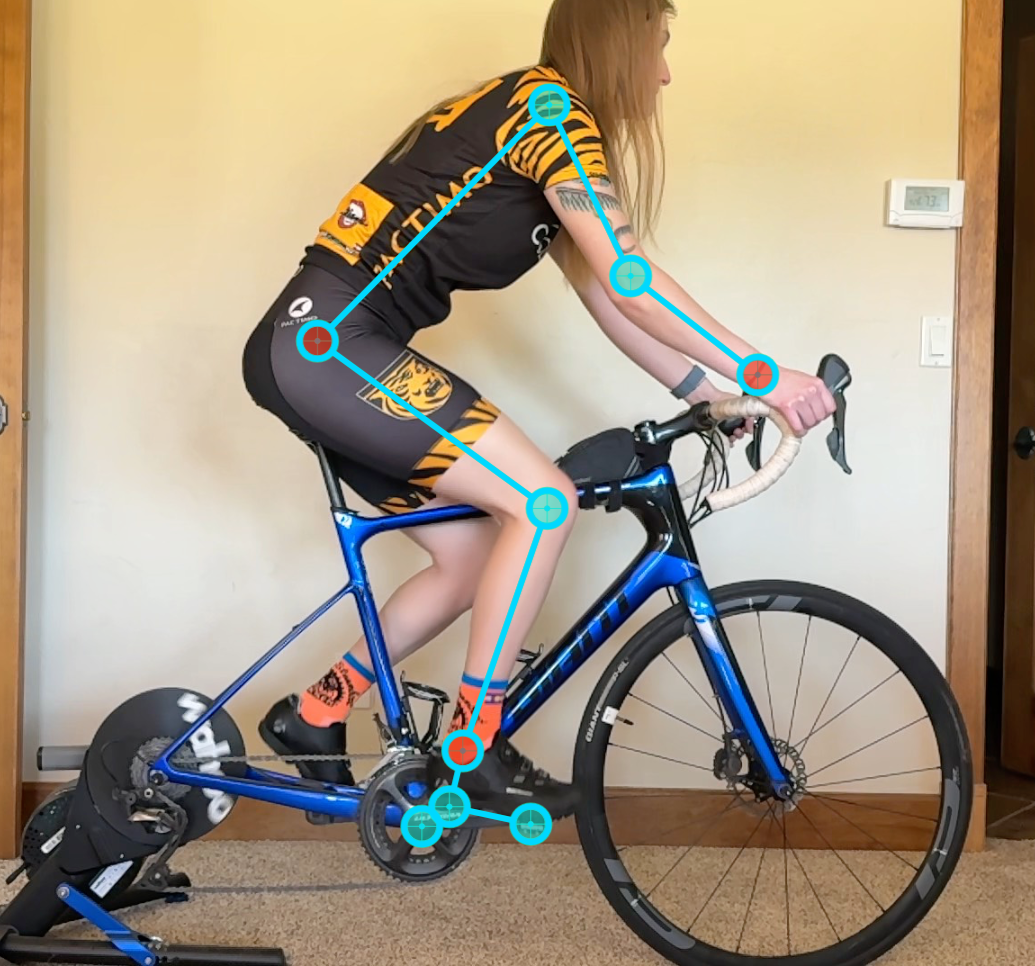
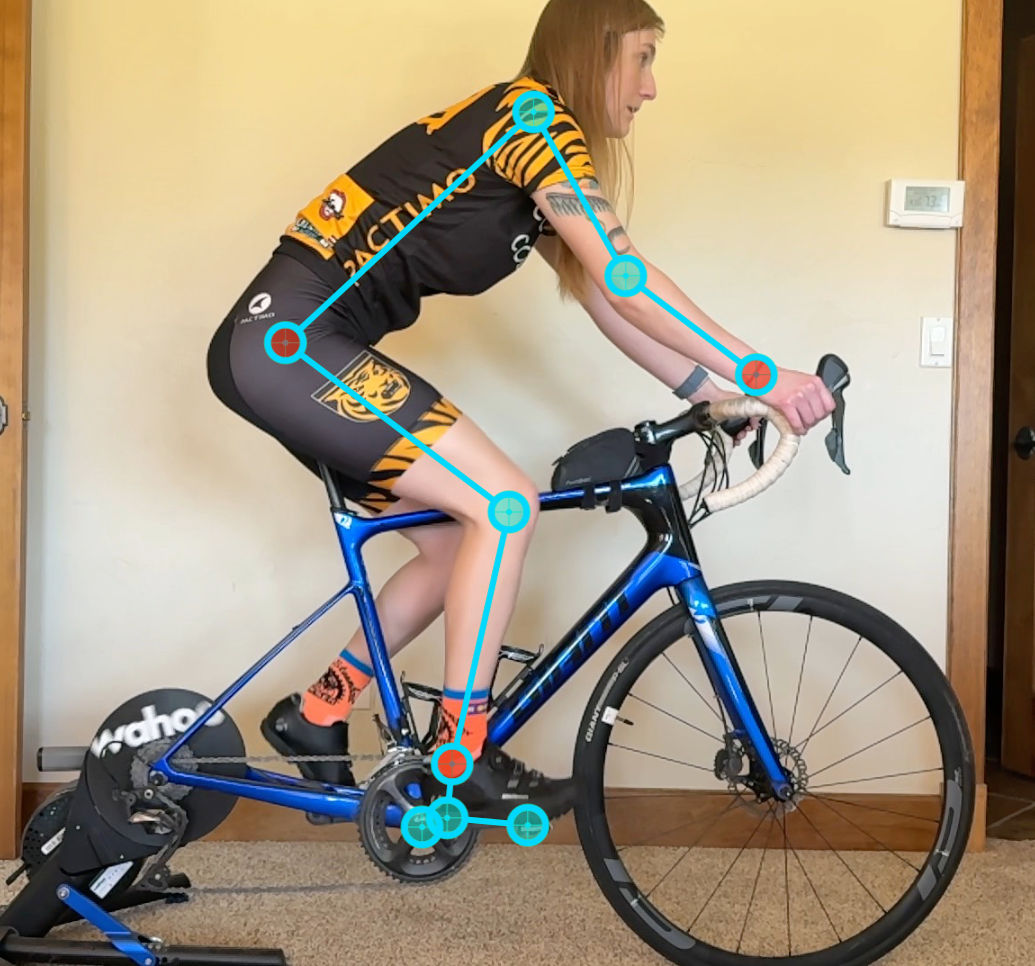
| Before | After | |
|---|---|---|
| Knee / Pedal | 18 mm | −36 mm |
| Eff. Saddle | 77.0° | 73.4° |
This works like the app's own comparison. On your session page, tap +, then New Comparison. Pick your Before and After side recordings and tap Compare, and the app saves the comparison in your session. Its table shows your knee, foot, hip, and shoulder angles rather than these two readings.
In between, there's a window where you sit balanced: light on your hands, with a comfortable push. Like saddle height, it's a range on the rails, and your aim is to land inside it.
An optional balance check: On the trainer, pedal steadily and lift your hands just above the hoods. If you tip forward, your saddle may be too far forward, or your core isn't holding you up. Indoors exaggerates this, because there's no wind on your chest.
Go deeper: