
Saddle height
Two angles at maximum knee extension
BFF Elite reads your saddle height at maximum knee extension (MKE), the moment in each pedal stroke when your leg is straightest, a little before the very bottom.
Two angles decide whether your saddle height is right, and Elite reads both at that moment:
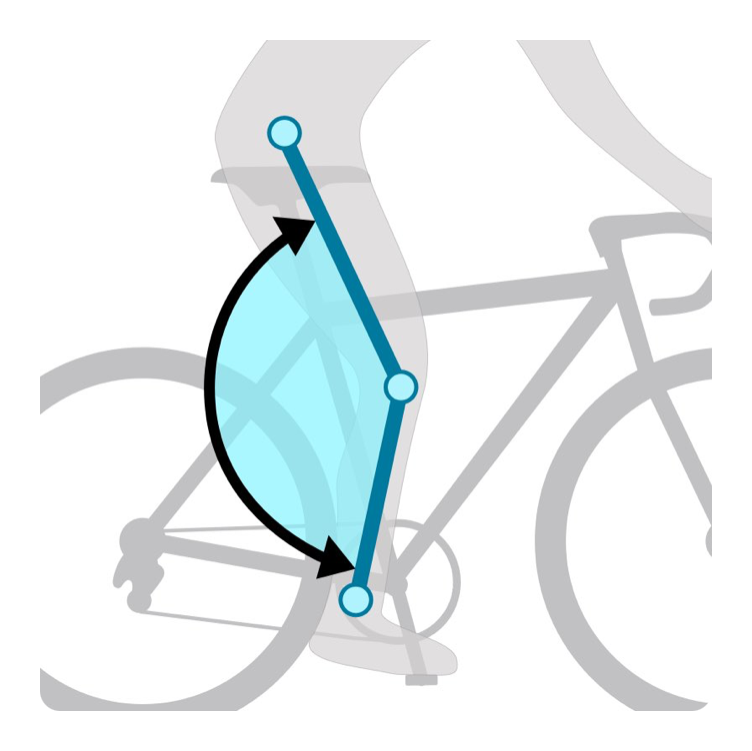
- Knee angle: how straight your knee is at its most extended, the angle between your hip, knee, and ankle.
- Foot angle: how your foot tilts from the horizontal, from heel-down (a low angle) to toe-down (a high one).
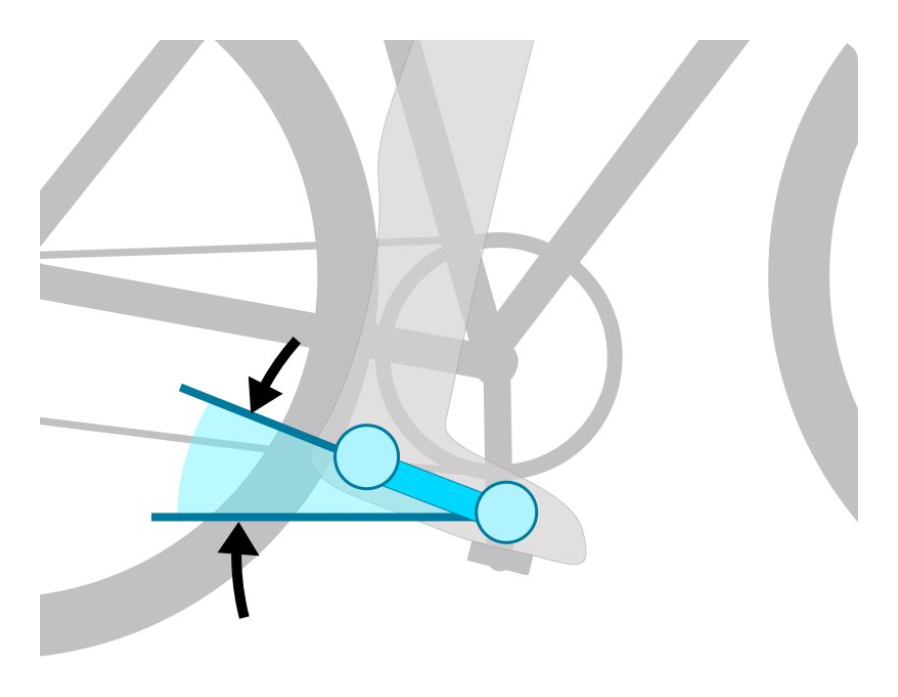
Your foot contributes your knee target. If you pedal heel-down, your target knee angle is higher, a straighter leg. If you pedal toe-down, your knee can stay a little more bent. Picture your foot as the last part of your leg reaching for the pedal: pointing your toes extends that reach, and dropping your heel pulls it back in. Same saddle, different foot, different knee angle.
That's why one angle on its own can't tell you whether your saddle is right. And how two people of similar builds can end up with different saddle heights.
Pedal the way you always do, without overthinking it. Changing how you pedal on purpose can skew your results.
If you find yourself pointing your toes hard to reach the bottom of the stroke, your saddle may be too high. The app can't see your hips rock, and it can read green while you're reaching. If you notice either, trust that over the reading. Don't raise your saddle; lower it about 5 mm and record again.
Go deeper:
- Millour et al. (2020): how your ankle changes your saddle height (free)
- Millour et al. (2019): why your knee angle reads differently standing still and pedaling (free PDF; it counts the knee from straight, so its 30 to 40 degrees is the app's 140 to 150)