 BFF Academy · EZ course
 Saddle fore/aft
The co-dependence with saddle height
Moving the saddle fore/aft also changes the effective saddle height. Because the seat tube is angled, sliding the saddle forward lowers it slightly and sliding back raises it, moving it up and away from the bottom bracket, often 2 to 3 mm for a 10 mm fore/aft move.
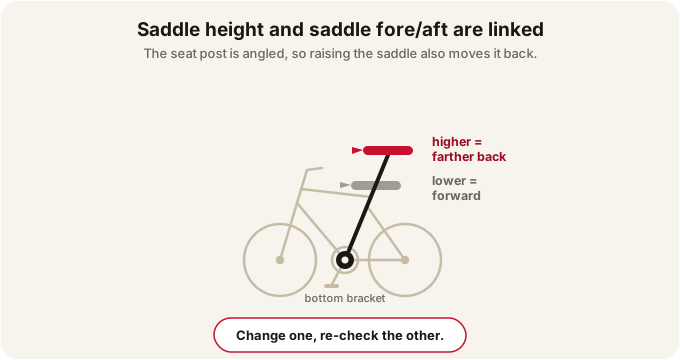
Change one thing at a time. Every fore/aft change shifts your knee angle reading too, so the next recording's saddle height recommendation may move. Don't try to dial in both in one pass. Expect two or three rounds before both settle into their windows together.
Here's a case that surprises people. One recording can tell you to raise the saddle a fair amount and still show your fore/aft already in the window, a checkmark at 0 mm. That looks like a contradiction, but it isn't: BFF EZ calculates your fore/aft assuming you make the height change first, and raising the saddle slides your hip back into the window on its own, so there's nothing left to correct. Trust the order. Change the height, re-record, and the fore/aft reading is recalculated from where your hip actually lands.